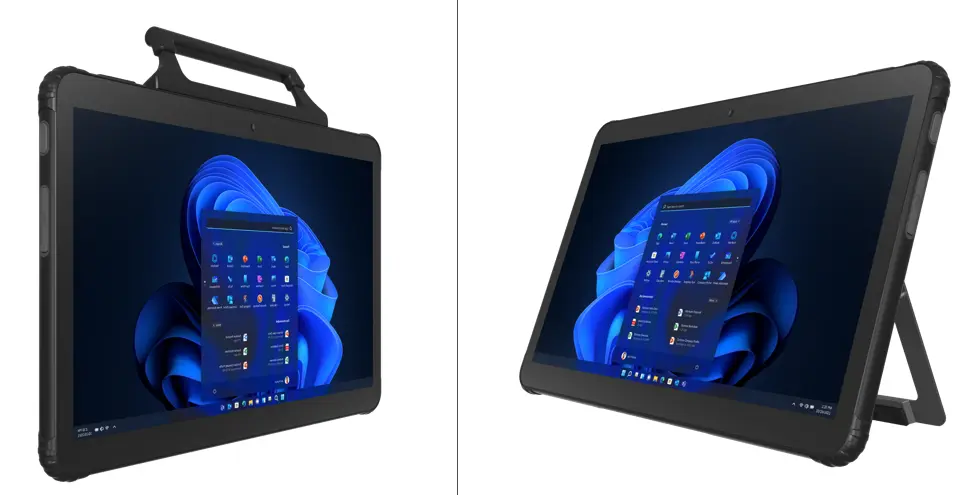
Rugged Tablet PC vs. Consumer Tablets: Why IP65 & MIL-STD-810G Matter
July 9, 2026 by
admin
I. Introduction: The False Economy of Consumer Devices
Imagine your field team on a critical maintenance call when a minor drop cracks a tablet screen—or worse, torrential rain causes the device to fail. Without a reliable backup, productivity stops, costs mount, and customer trust is compromised. This scenario is a frequent reality for organizations relying on consumer-grade devices, like iPads or standard Android tablets, for demanding industrial and field applications.
While consumer tablets might seem like the economical choice upfront, the reality is starkly different. Studies show that nearly 30% of consumer-grade tablets fail within their first year of use in industrial environments. The fallout from device failures, including repairs, replacements, and downtime, often far outweighs the initial savings. For operations in demanding environments, the key to maximizing productivity and avoiding costly disruptions lies in investing in rugged tablet computers.
II. What Makes a Tablet “Rugged”? (Defining Expertise)
Not all tablets are designed equally—and simply slapping a ruggedized case onto a consumer tablet doesn’t make it suitable for industrial environments. A true tablet rugged PC, like those developed by Estone, is engineered from the inside out to handle the rigors of tough working conditions. The difference starts with the internal components.
Thermal Management: Purpose-built rugged tablets feature advanced systems to manage extreme temperatures, unlike consumer devices, which often overheat in high-heat environments or fail in freezing conditions.
Reinforced Printed Circuit Boards (PCBs): Durable PCBs inside rugged tablets absorb shock and resist failure, whereas consumer tablets are prone to circuit damage.
Unlike consumer tablets, built for personal and casual use, a rugged tablet computer is specifically designed to withstand the literal and figurative trials of the field.
III. Deep Dive: Decoding MIL-STD-810G (The Resilience Standard)
The designation MIL-STD-810G or its updated version, MIL-STD-810H, stands as a gold standard for durability in rugged computing devices. Originally developed by the U.S. Department of Defense, this standard tests a device’s ability to withstand harsh conditions such as temperature extremes, shock, vibration, and even rapid atmospheric pressure changes.
For instance, a consumer tablet’s thin glass and glued-together components often crumble under harsh vibration, leading to frequent breakdowns. In contrast, an Estone rugged tablet is built with a reinforced chassis, anti-shock internal mounts, and a durable casing, ensuring optimal performance no matter the terrain.
IV. Understanding IP65: Dust and Water is Just the Beginning
Another critical metric for evaluating rugged tablets is the ingress protection (IP) rating, particularly the IP65 standard. Each digit in this rating reveals different capabilities:
6 (Dust Protection): Complete dust-tight sealing, ensuring no particles can infiltrate critical components.
5 (Water Resistance): Protection from low-pressure water jets from any direction—ideal for conditions like rain, splashes, or wet environments.
Picture your team working through a sudden downpour at a construction site or operating in a dusty warehouse. A consumer tablet’s charging port or exposed buttons make it incredibly vulnerable to liquid ingress and particulate contamination. On the other hand, the IP65-rated rugged tablets are built for precisely these situations, keeping operations on track no matter the condition.
V. Consumer vs. Rugged: The Feature Gap Table
Here’s a side-by-side comparison to illustrate why rugged tablets stand apart:
Feature
Consumer Tablet
Estone Rugged Tablet PC
Drop Rating
Approx. 1-2 feet (unrated)
4-5 feet (MIL-STD-810G)
Display
High-gloss (unreadable in the sun)
Sunlight Readable / 1000+ Nits
Connectivity
Standard Wi-Fi
GPS, 4G/5G LTE, Specialized I/O
Touch Screen
Bare finger only
Gloved-hand and Wet-touch modes
Lifecycle
12-18 months (obsolescence)
5+ Years (Long-term support)
VI. Total Cost of Ownership (TCO): The Business Case
Upfront costs often deceive decision-makers. While a rugged tablet may cost more initially, it offers significant savings over time due to lower failure rates and longer lifespans. The concept of Total Cost of Ownership (TCO) highlights these savings:
Fewer breakdowns mean less downtime and higher productivity.
Durability reduces the costs associated with repairs and replacements.
Longer support cycles ensure you don’t need frequent upgrades or migrations.
Over a three-year period, an investment in a rugged tablet often leads to cost savings of up to 40% compared to consumer devices—a compelling business case for IT managers and operations heads.
VII. Industry Applications: Estone in Action
Estone’s rugged tablet PCs excel across multiple industries, showcasing their versatility and reliability in challenging environments:
Warehousing: Rugged tablets mounted on forklifts or carts remain operational amid vibrations, ensuring smooth logistics.
Field Engineering: Hot-swappable batteries and all-day battery life enable all-weather field operations without interruptions.
VIII. Conclusion: Making the Strategic Choice
In summary, consumer tablets may serve well for casual use, but they aren’t built to withstand the demanding environments of industrial or field operations. Rugged tablet PCs, like those offered by Estone, are engineered with MIL-STD-810G durability, IP65 resistance, and advanced features like sunlight-readable displays and gloved-hand touch screens. The result? Less downtime, lower TCO, and higher operational efficiency.
Contact For Personal Quote
Stay updated with Estone's latest product solution and technology. Subscribe to our Newsletter. Mail us: info@estonetech.eu